

How to Choose the Right Baby Dress Size | IPPO Shopping
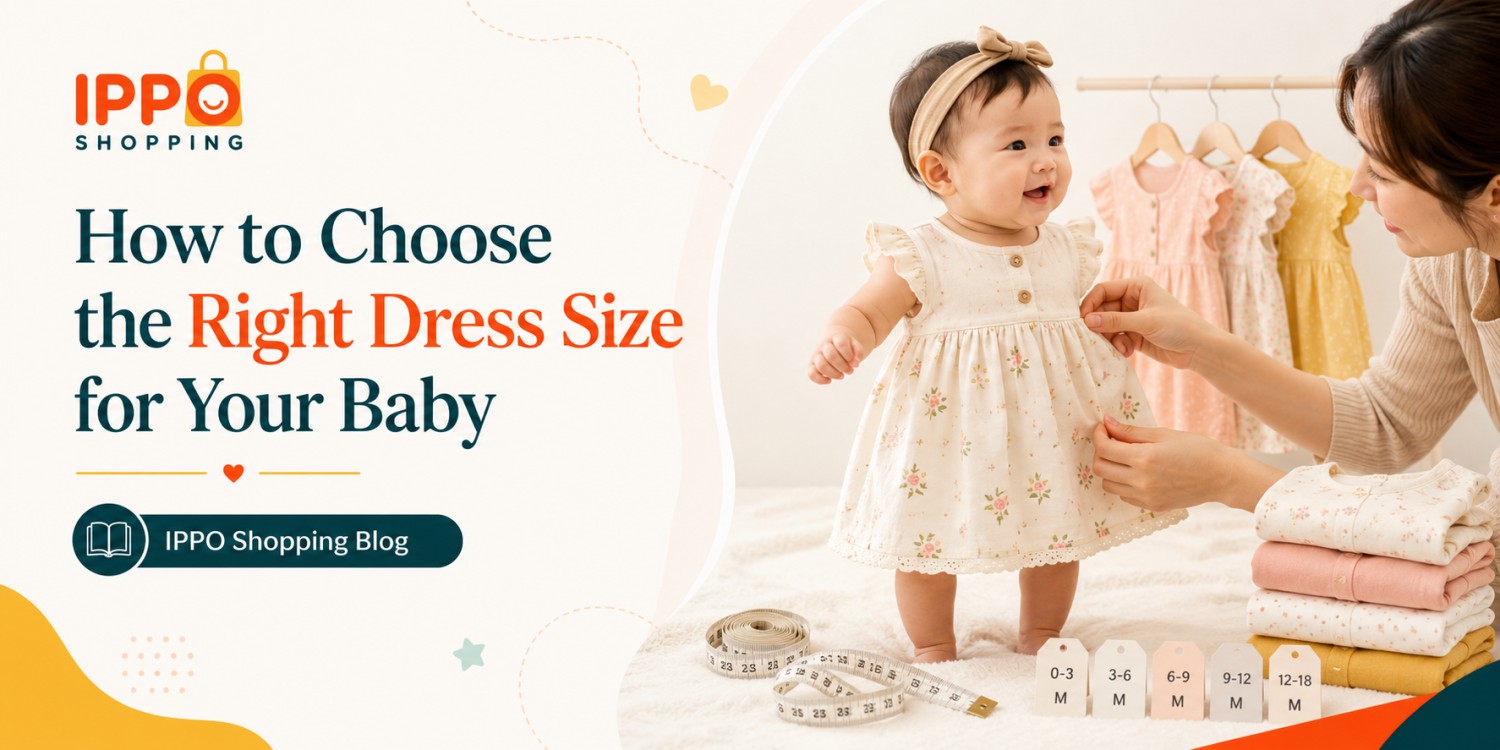
How to Choose the Right Dress Size for Your Baby
Buying clothes for a baby can be exciting, but choosing the correct size is not always easy. Baby dress sizes may be labelled by age, such as 0–3 months or 6–9 months, but babies grow at different speeds. Two babies of the same age may need completely different clothing sizes.
The best way to choose the right baby dress size is to consider your baby’s height, weight, body shape, comfort, and the size chart provided for the product.
Why the Right Baby Dress Size Matters
A properly fitting dress helps your baby move comfortably, sleep peacefully, and enjoy playtime without irritation.
Clothes that are too tight may:
Restrict movement
Leave marks on the baby’s skin
Cause discomfort around the neck, waist, arms, or thighs
Make dressing and diaper changes difficult
Clothes that are too loose may:
Slip from the shoulders
Cover the baby’s hands or feet
Make crawling or walking uncomfortable
Create unnecessary safety concerns
The ideal baby dress should provide enough room for movement without being excessively loose.
Do Not Choose the Size Based Only on Age
Baby clothing sizes are commonly grouped by age:
Newborn
0–3 months
3–6 months
6–9 months
9–12 months
12–18 months
18–24 months
However, these age groups should only be treated as a general guide.
Some babies may be taller, shorter, slimmer, or healthier than the average size for their age. Before placing an order, check your baby’s current measurements and compare them with the product size chart.
Measure Your Baby Before Buying
You do not need complicated equipment to measure your baby. A soft measuring tape is enough.
1. Measure the Chest
Wrap the measuring tape gently around the widest part of your baby’s chest. Make sure the tape is not too tight.
Chest measurement is especially important when buying shirts, frocks, T-shirts, rompers, kurtas, and party wear.
2. Measure the Height
Measure your baby from the top of the head to the heel.
For smaller babies, you can place them safely on a flat surface and measure their length. For toddlers who can stand, measure them while they are standing straight.
3. Measure the Waist
Measure around the natural waist area without pulling the tape tightly.
This measurement is helpful when choosing pants, skirts, shorts, lehengas, and dresses with fitted waistbands.
4. Check the Dress Length
For frocks, gowns, nightwear, and traditional dresses, check the length mentioned in the product description.
The same dress may look shorter or longer depending on your baby’s height.
Always Check the Product Size Chart
Size labels may differ between brands and sellers. A 6–9-month size from one brand may not be exactly the same as a 6–9-month size from another brand.
Before buying, check:
Chest measurement
Dress length
Waist measurement
Shoulder width
Sleeve length
Recommended height
Recommended weight
Never assume that your baby will wear the same size across every brand.
Consider Your Baby’s Current Weight and Height
Height and weight are often more reliable than age when choosing baby clothes.
For example, a seven-month-old baby who is taller than average may need a 9–12-month dress. Similarly, a smaller baby may still fit comfortably into a 3–6-month size.
When your baby’s measurements fall between two sizes, choosing the larger size is usually more practical, provided the dress is not excessively loose.
Choose a Slightly Bigger Size for Growing Babies
Babies grow quickly, especially during their first two years. A dress that fits perfectly today may become tight within a few weeks.
Choosing one size bigger can be useful when:
You are buying clothes for future use
The baby is growing quickly
The outfit has a fitted design
The fabric has very little stretch
You are buying seasonal or occasional wear
However, avoid purchasing clothes that are far too large. Oversized dresses may be uncomfortable and difficult for babies to move in.
Think About the Diaper Space
Diapers add extra volume around the baby’s waist and hip area. This should be considered when buying:
Rompers
Bodysuits
Jumpsuits
Shorts
Pants
Leggings
Nightwear
The dress should provide enough space for a diaper without becoming tight around the thighs or waist.
Clothes with snap buttons or easy-open designs can make diaper changes quicker and more convenient.
Check the Fabric and Stretch
The type of fabric can affect how a dress fits.
Cotton
Cotton is soft, breathable, and suitable for everyday use. Some cotton garments may shrink slightly after washing, so check the washing instructions before selecting the size.
Stretchable Fabrics
Fabrics with some elasticity may provide a more flexible fit and allow easier movement.
Party Wear Fabrics
Party dresses, gowns, and traditional outfits may have less stretch. For these outfits, chest, waist, shoulder, and length measurements should be checked carefully.
No matter which fabric you choose, make sure it feels soft against your baby’s skin.
Consider the Season
The season can also influence the size you select.
During summer, lightweight and comfortably fitted cotton clothes are usually suitable.
During cooler weather, your baby may wear an inner layer beneath the dress. In such cases, a slightly roomier size may provide better comfort.
When buying clothes in advance, consider how much your baby may grow before the outfit is actually used.
Choosing a Size for a Baby Gift
Selecting baby clothes as a gift can be difficult when you do not know the baby’s exact measurements.
A safer approach is to:
Ask the parents for the baby’s current size
Select one size larger than the baby’s present age group
Choose adjustable or stretchable designs
Avoid tightly fitted outfits
Check the exchange or return policy before ordering
For newborn gifts, many people receive newborn-size clothing. Choosing a 3–6-month or 6–9-month outfit may allow the gift to be used for a longer period.
Signs That a Baby Dress Is Too Small
A baby dress may be too small when:
It leaves marks on the skin
Buttons or snaps are difficult to close
The neckline feels tight
The sleeves restrict arm movement
The waistband presses against the stomach
The dress pulls tightly around the diaper
Your baby appears uncomfortable while moving
Do not continue using an outfit once it becomes restrictive.
Signs That a Baby Dress Is Too Large
A dress may be too large when:
It repeatedly slips from the shoulders
The sleeves completely cover the hands
The neckline hangs too low
The baby trips over the dress
Loose fabric interferes with crawling
The waistband does not stay in place
The goal is to find a comfortable balance between growing room and a secure fit.
Quick Baby Dress Size Checklist
Before placing your order, ask yourself:
Have I checked my baby’s current height and weight?
Have I compared the measurements with the product size chart?
Is there enough room for movement and diapers?
Is the fabric stretchable or non-stretchable?
Am I buying the dress for immediate or future use?
Will the baby wear an additional layer underneath?
Is the outfit suitable for the season?
Have I checked the return or exchange policy?
Final Thoughts
Choosing the right dress size for your baby becomes easier when you focus on measurements rather than age labels alone. Always compare your baby’s height, weight, chest, waist, and dress length with the product size chart.
Select clothing that gives your baby freedom to move, enough diaper space, soft fabric, and a little room to grow. Comfort should always come before style—but with the right size, your baby can enjoy both.
At IPPO Shopping, we aim to make baby clothing selection simple and convenient. Check the measurements provided with every product and choose a comfortable outfit made for your little one’s everyday moments, celebrations, and adorable adventures.
Recent Posts